Learning to Draw
Drawing is the foundation of everything we do at Maksla Studio. More than a way of recording what we see, it is a way of understanding the visual world. Learning to draw means learning to see differently — to notice relationships, recognise structure, understand light, and discover how images are built.
At the heart of every lesson is a simple principle:
See. Know. Feel.
See
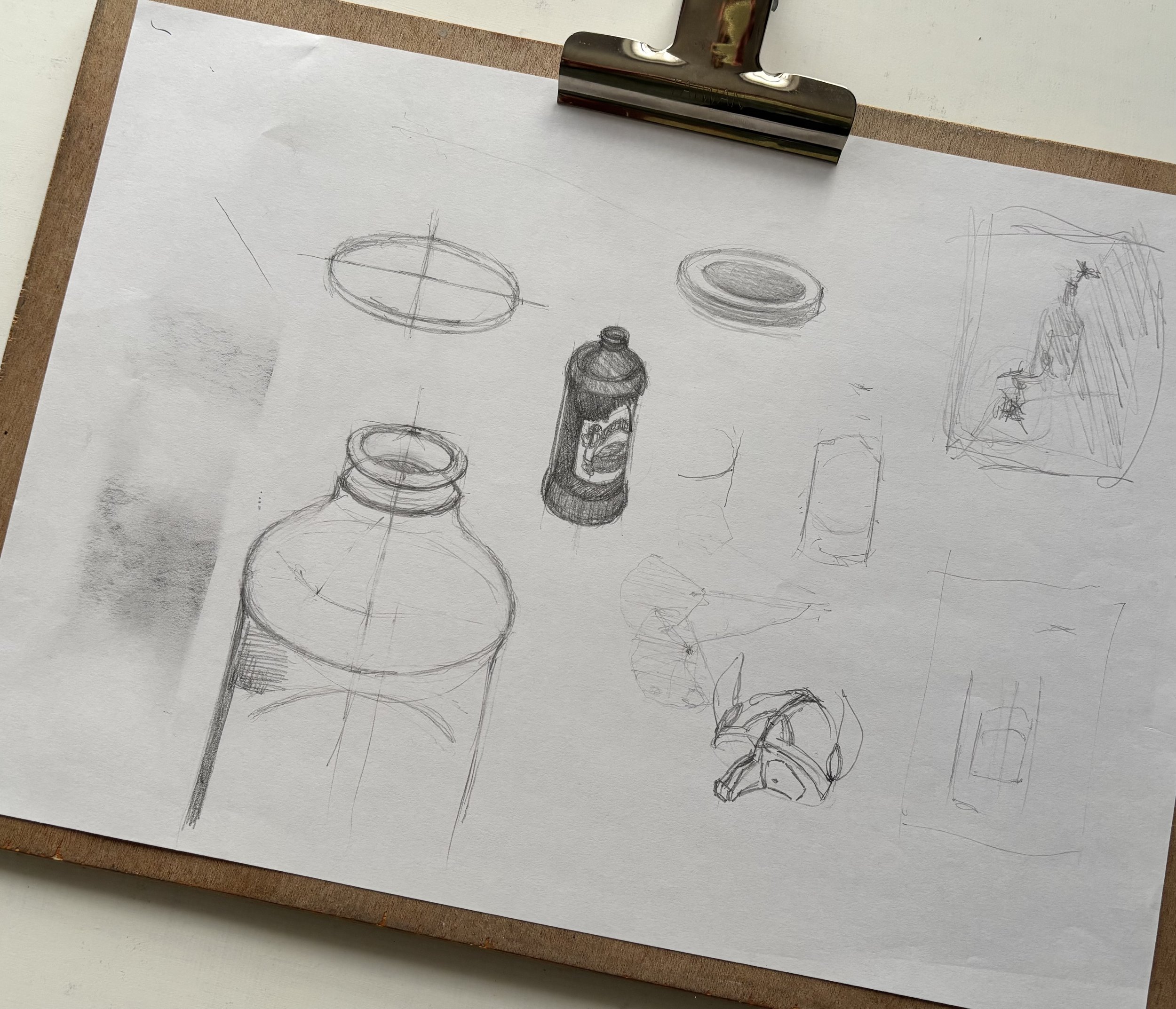
Learn to pause and look before making the first mark. Break complex forms into simple shapes and recognise the underlying structure.
Know
Understand how simple forms are built and how they exist in space.
Feel
Develop the confidence to recognise when something isn’t working. Trust your visual judgement, ask why, and use your understanding to resolve it.
Successful image-making happens when these three ways of thinking work together.
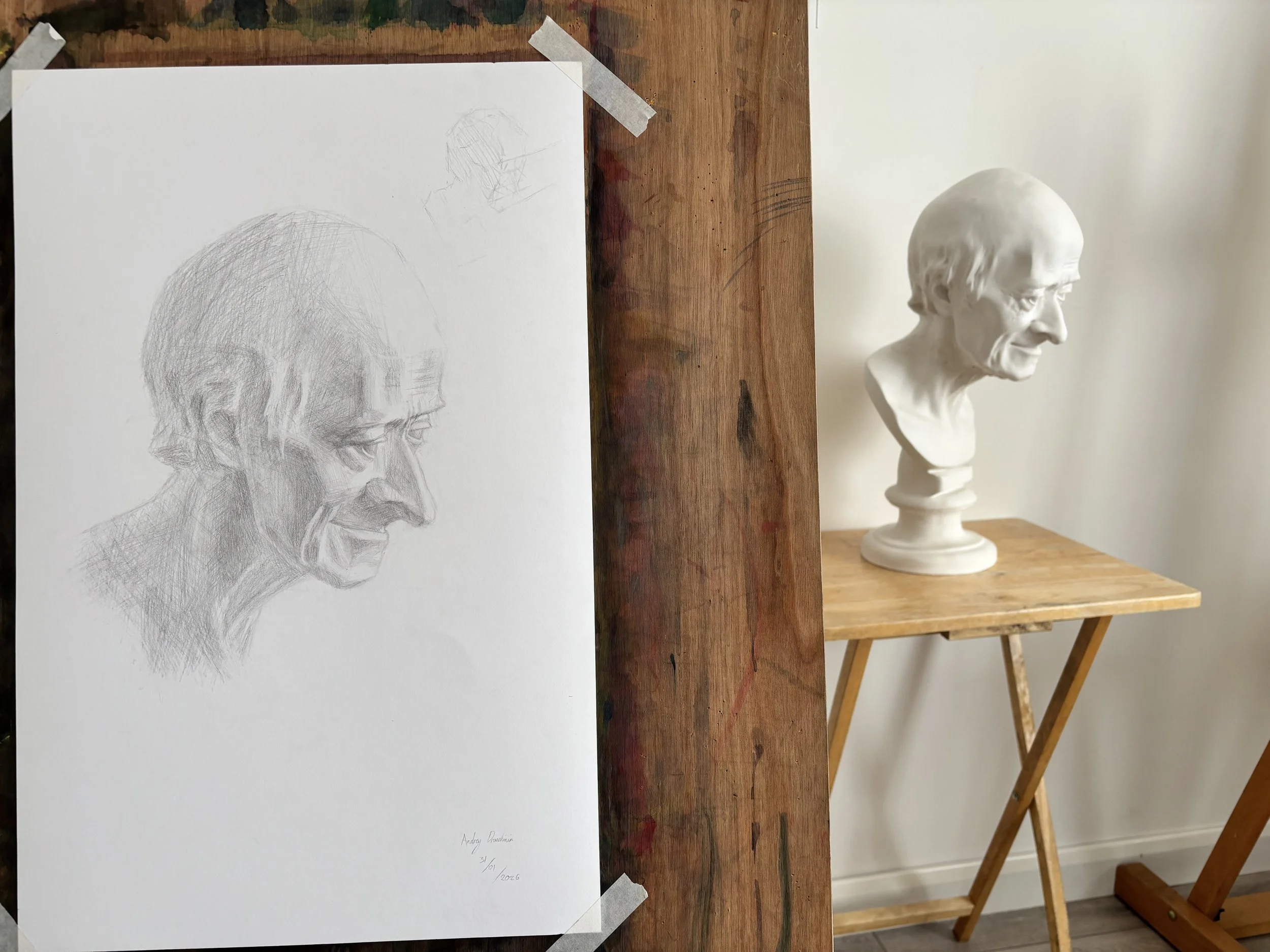
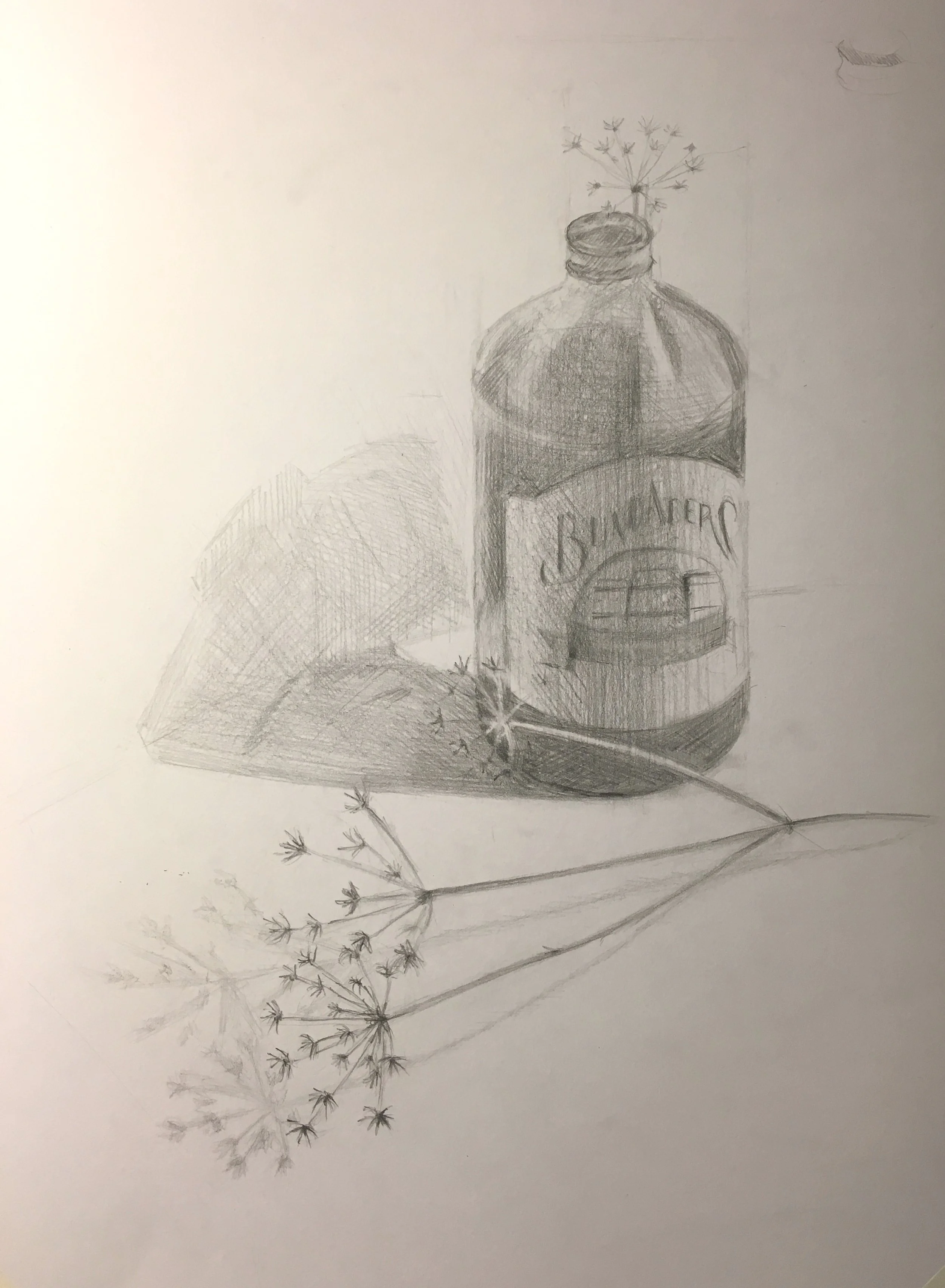
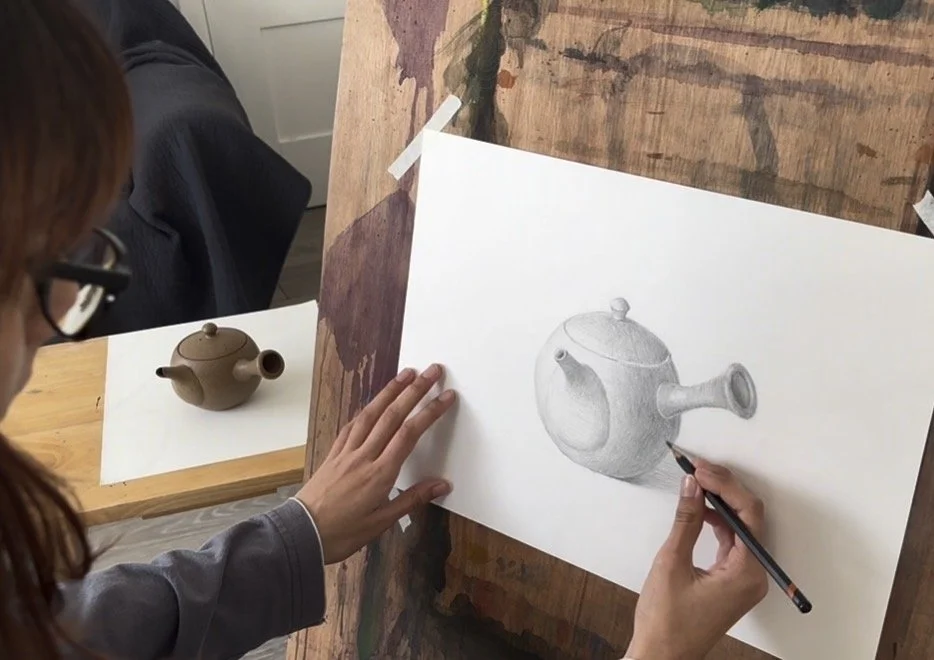
Learning begins through direct observation. Rather than copying photographs, students work from real objects whenever possible. Unlike a flat image, a real object can be explored from different angles and under changing light, encouraging a deeper understanding of three-dimensional form and space.
This approach develops far more than the ability to produce accurate drawings. It builds the confidence to construct, rotate and imagine forms, creating a solid foundation for all visual practice.
Technical skills are introduced as they become necessary. Measuring, construction, perspective, line, tone, shading and mark-making are never treated as ends in themselves. Every technique exists to answer a question, solve a visual problem or communicate an idea more clearly.
Even seemingly small details matter: how you sharpen a pencil, how you hold it, and whether a mark is made from the wrist or the whole arm all influence the quality, confidence and character of a drawing.
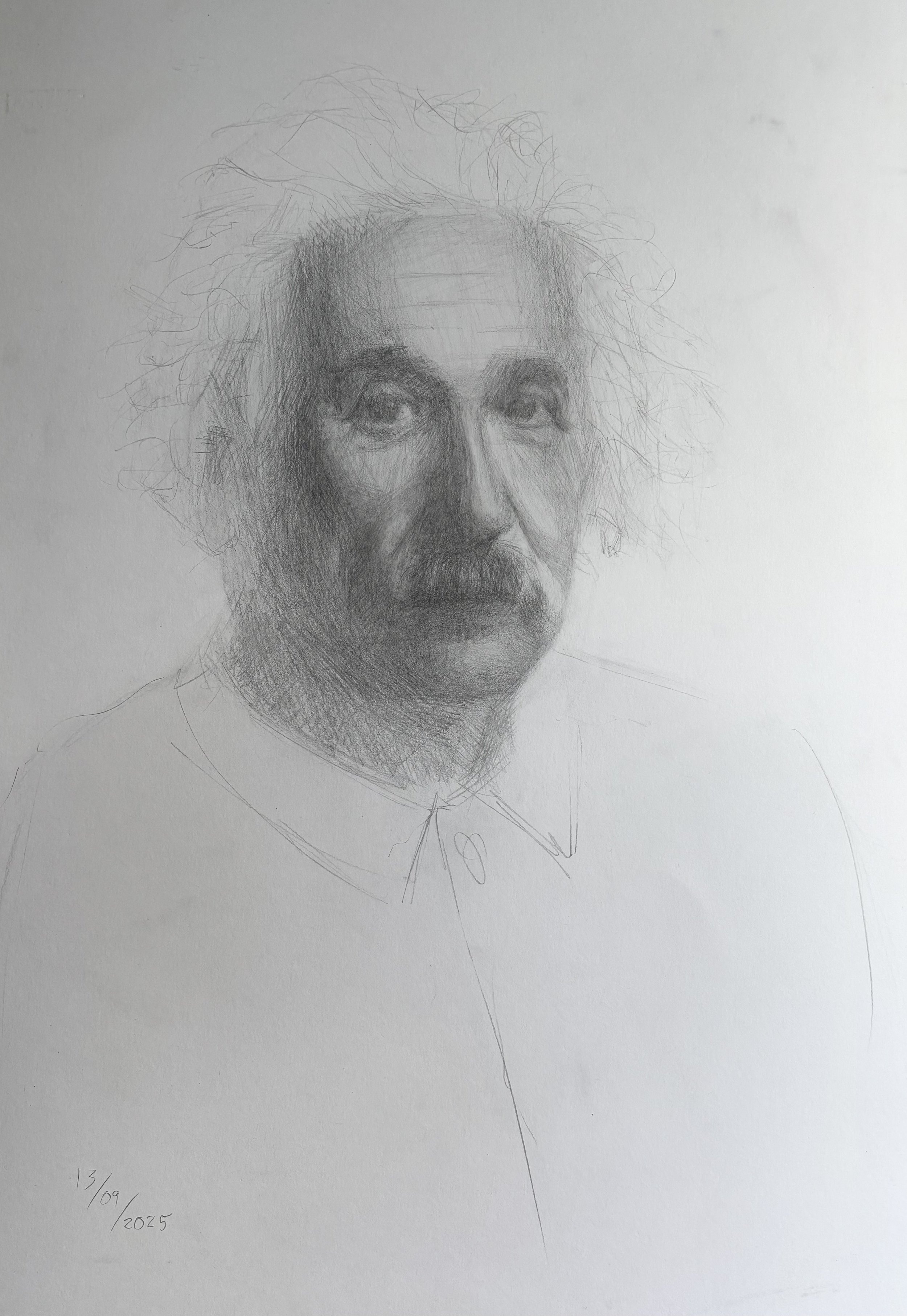
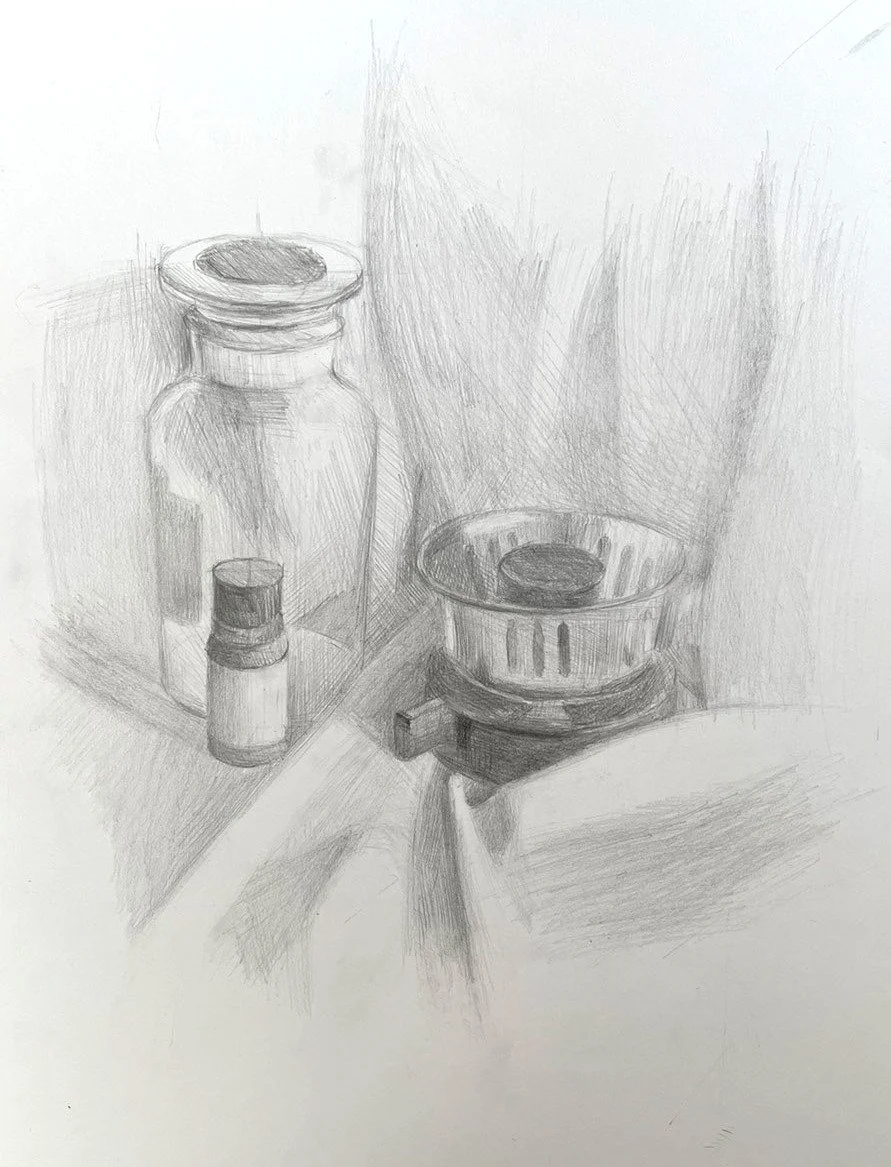
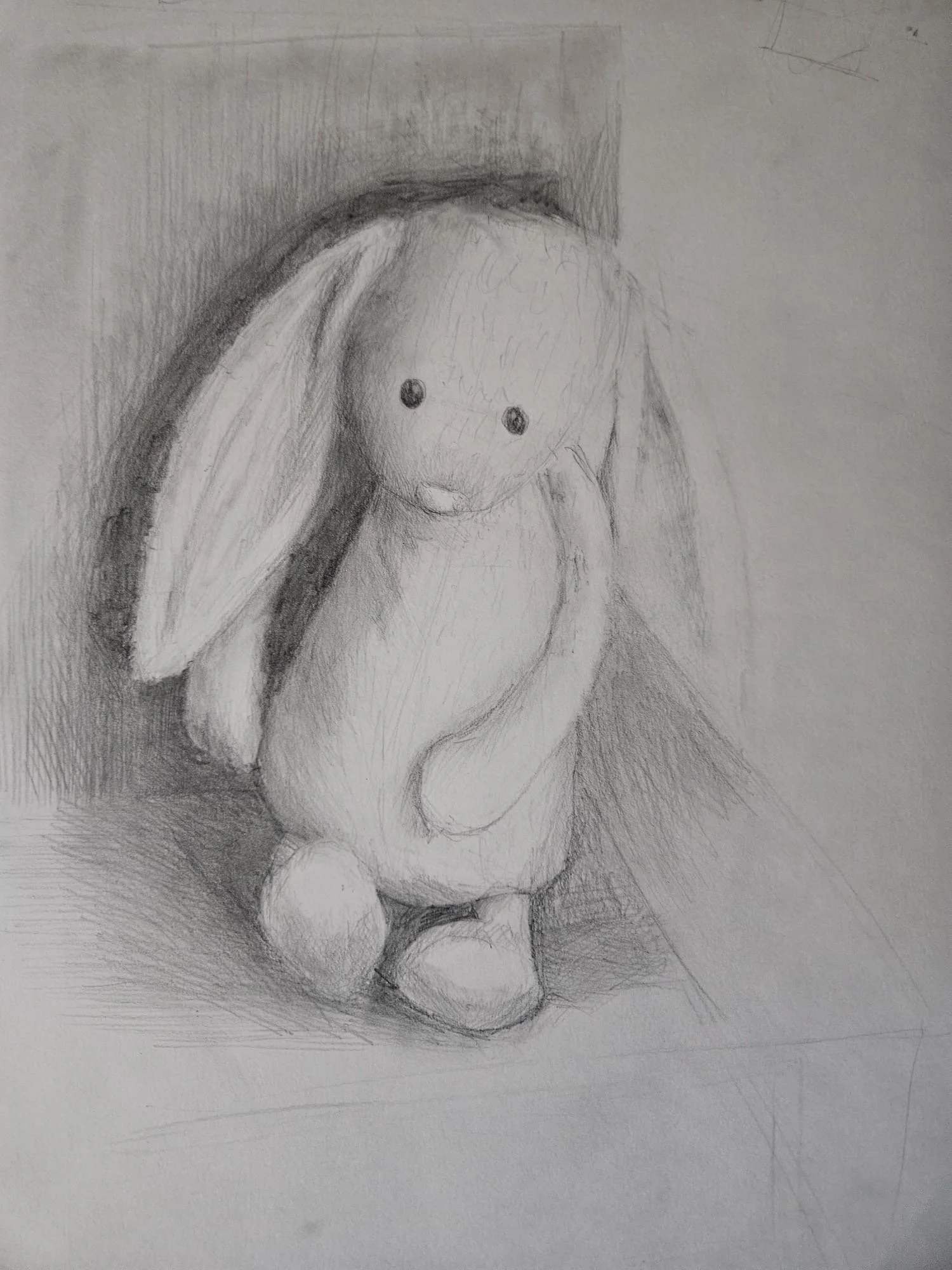
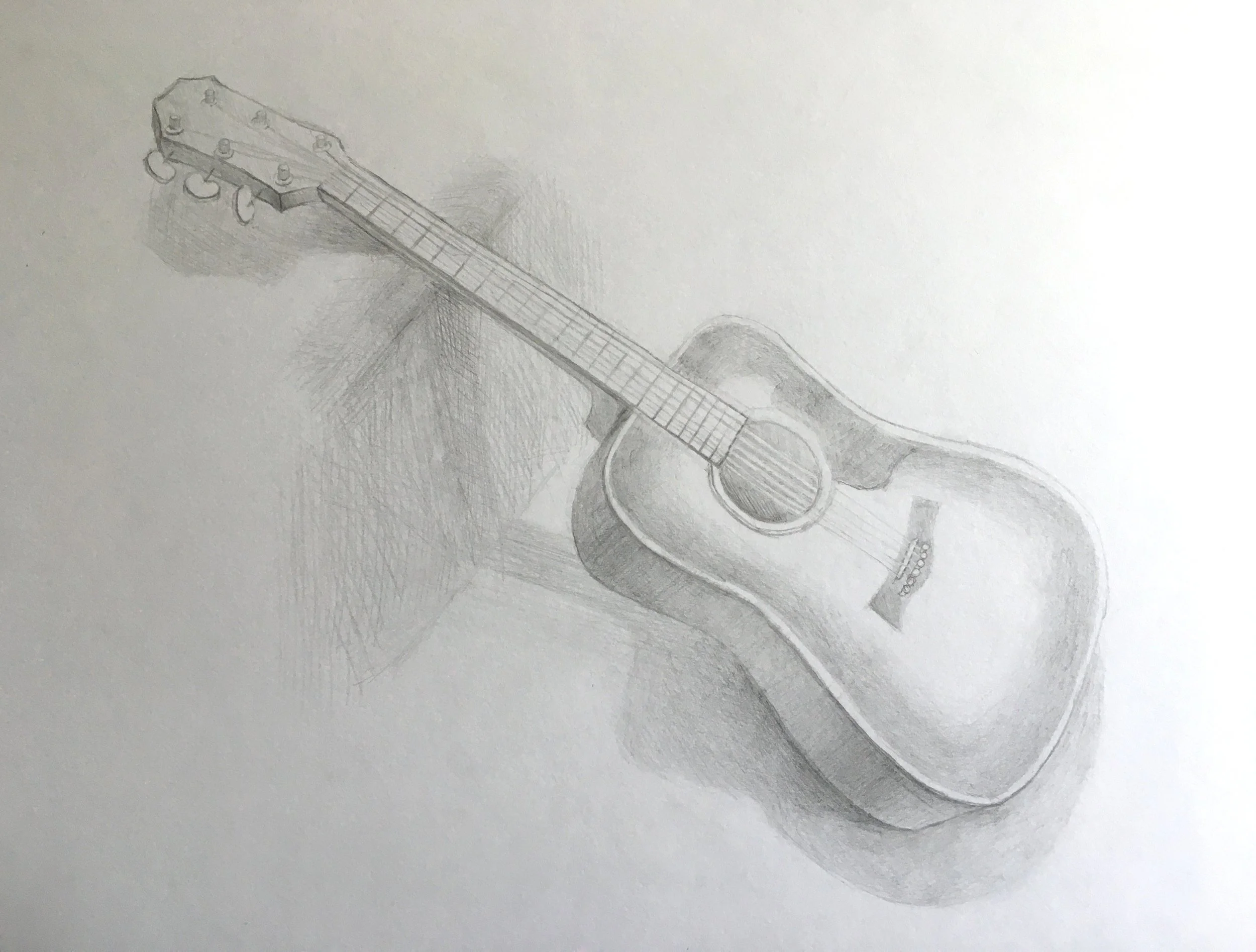
In most lessons we use graphite pencil on paper, while charcoal, sanguine, chalk and coloured pencils are introduced to explore different qualities of line, tone and texture.
Although classes take place in groups of up to four students, everyone follows an individual programme. Beginners and experienced artists often work side by side, each progressing at their own pace through projects that reflect their interests and goals. Some studies develop over several weeks, while others are short, focused exercises designed to strengthen a particular aspect of visual understanding.
The aim is not simply to produce successful drawings, but to develop a way of seeing, thinking and questioning that shapes every future visual decision.
The sessions are 90 minutes long and cost £35.